
This past few weeks have been really busy. There is quite a lot going on in both my working life and personal life. Work is mad busy, I shouldn’t complain really, but it’s meant not as many Fridays as usual. With the lockdown road map easing its meant I’ve wanted to be out with friends doing the things we haven’t been able to, beer, food etc etc.
The bank holiday weekend presented the ideal opportunity, I was determined that I was going out to secure the last location in my 12 Significant Images project, but I was not really sure of exactly where. I packed my walk around pack and set off, but not sure where. I headed vaguely south, and set off along the new A555 bypass. As I drove I decided that I wanted to add another location with some water in it. The decision was made, I headed to Tegs Nose Country Park, there are 3 or 4 reservoirs there, as well as lots of hills etc etc.
Having been to Tegs Nose Country Park a few times before I decided to park at the visitors centre and walk down the bridleway, and see if I could get another image of the wonderful lines that you can see as you walk down the path towards the reservoirs. I wasn’t disappointed.
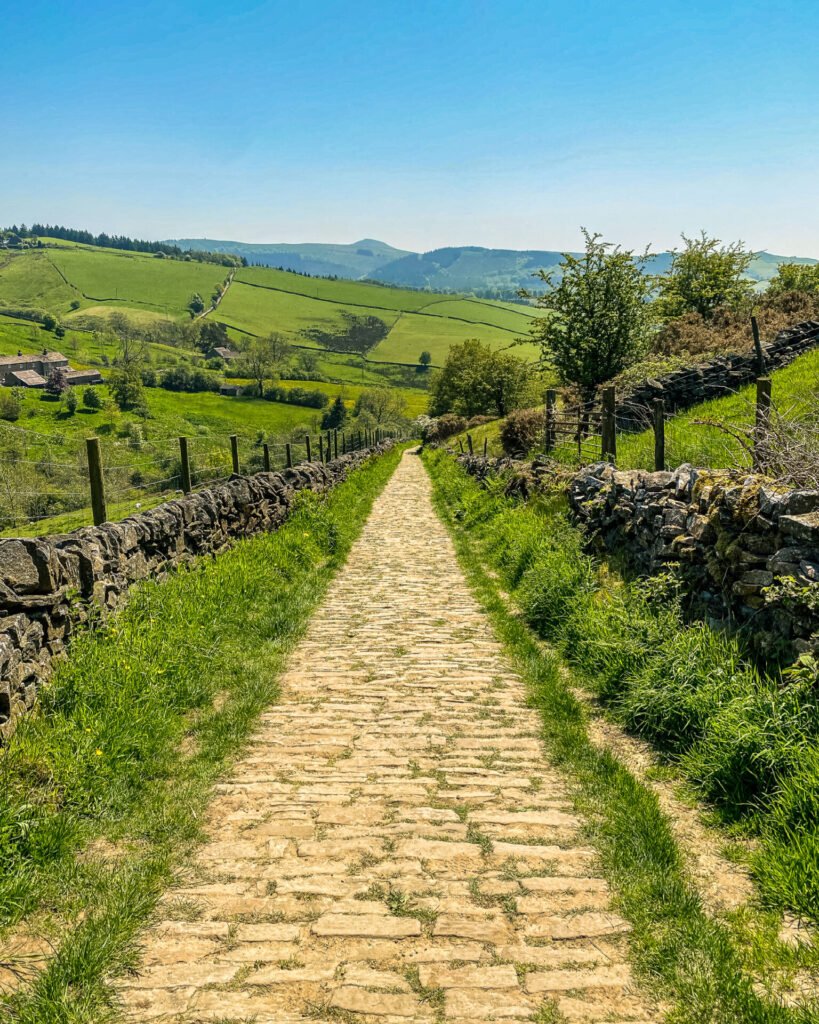
Leading Lines Anyone?
There are two main routes to get around the Country Park, both involve steep paths, but one is far bigger than the other. As I walked down the path (bridleway) I was struck by the beauty of the countryside we have in this country. Given my camera was still packed away in my backpack I took out my iPhone 11 Pro Max and snapped this image. I don’t usually post iPhone images on my website but this is an exception, I really like this. The path leads the eye through to the centre of the image and onto the hills behind. The hill that is the highest point in this image (slightly off centre) is Shotslingsloe, that will be a walk on its own but it does make a good background element to this image.
Given that I wanted to try to add some water to my significant images locations the camera was staying in the backpack until I got to the reservoirs. There are 4 reservoirs all within a short walk of each other, but I struck lucky at the first one I came to, Tegs Nose Reservoir.
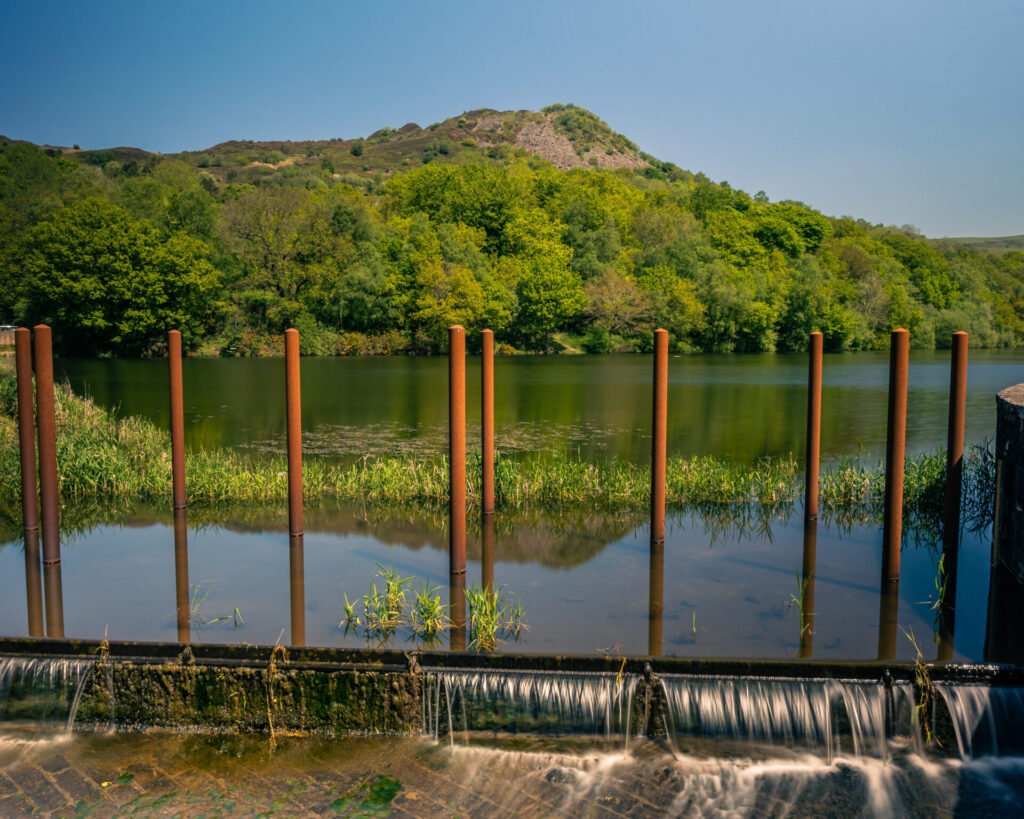
Tegs Nose Reservoir and Peak
I must admit I’d looked at this spot a few times before and decided there wasn’t a good composition here, but I thought I’d give it the benefit of the doubt and see what I could find. This spot is in the south west corner of the reservoir and is the start of the overflow down into the other reservoirs. I’m really not sure what those metal spikes are designed for. Maybe they are there to spot anything attempting to get down the overflow shoot. Who knows. I don’t really care what they are designed for, as I think they make a great addition to the foreground of this image, along with the sundry weeds and leaves floating around in the water just beyond the spikes.
The peak in the background is Tegs Nose itself and is 380 meters high. You get a great view over towards the macclesfield forest from up there, as well as the various reservoirs, but that will be for another Project on another occasion. The regular readers will know that my carry around pack contains my Sony A6600 with the 16 to 55 f2.8 G lens (effectively its 24 to 83 Full frame equivalent range). I’ve invested in some circular ND filters that I also carry around with me as well as a circular polariser. This image has the ND 64 filter cranked right up, giving me a shutter speed of 2 seconds. This gives me enough exposure to get some milkiness in the water as it rushes over and down into the overspill, but not enough to render the whole of the water flat and white.
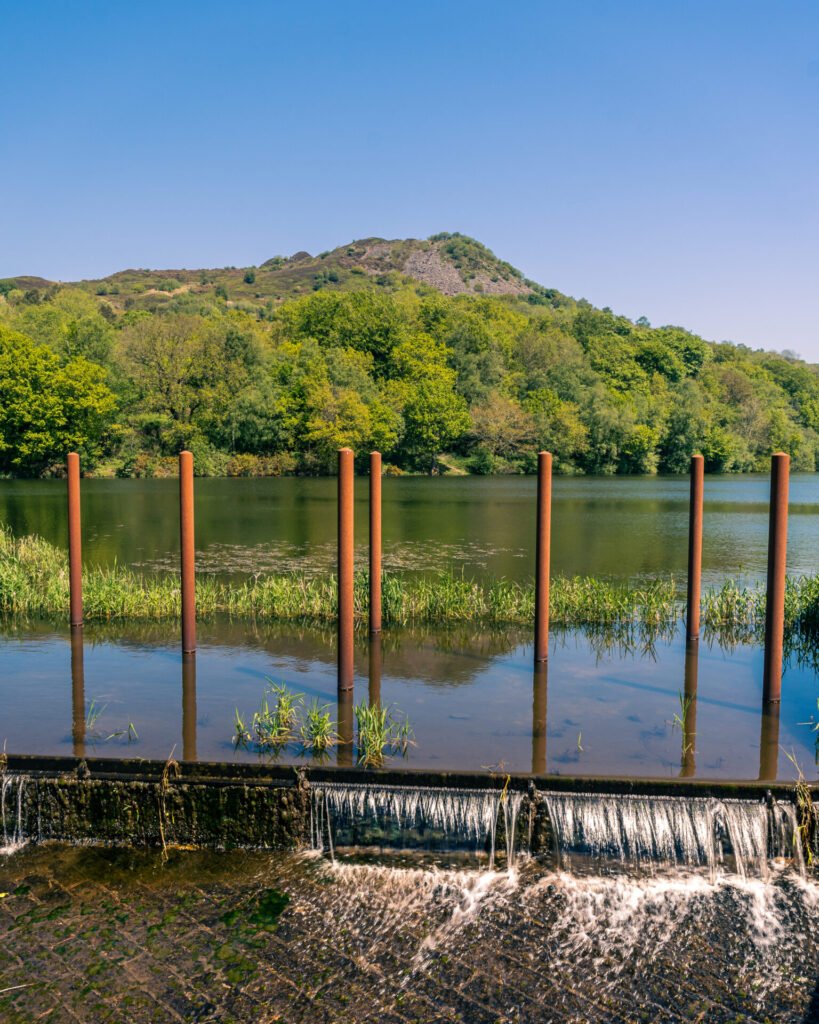
Portrait Perspective
As always when taking images for this (and all of my projects) I take both landscape and portrait orientation images. You can see more of the overspill area on this image and the natural state of the water as this image doesn’t have an ND filter on it, merely a circular polariser. This is 1/20 of a second shutter speed at f11, with ISO at 100. Of the two images I definitely prefer the landscape orientation. I think the wider angle (it was at 16mm which is 24mm full frame equivalent) gives a better scene with more interest and the image shows off more of what my eyes actually focused on as I stood behind the camera.
I took quite a few images of this scene, and mulled over what else I could take images of. The beauty of the A6600 is that it is easy to carry around and having the Peak Design wrist strap on the camera it makes taking hand held shots that much easier to take. Not that the two images above were handheld they were both shot on my travel tripod.
Further investigation of the area, showed me that I can actually drive to within a short walk of where this image was taken, which will mean that getting my full pack here in future won’t be as back breaking as it would need to be if I had to walk. I’m thankful for small mercies, i’m not as young as I used to be.
So I now have my 12 locations identified with a least one image from each location already in the bag. The following is a complete list of my 12 locations.
(1) Bramhall hall, (2) Old Mill at Cheesden, (3) The Cenotaph on Werneth Low, (4) Mill Stones on Stanage Edge, (5) The lone Tree at Bottoms Reservoir, (6) Lower Ormerods (Ogden Reservoir) Clough Head, (7) The Stepping Stones at Whitewell, (8) Parrswood Bridge over the River Mersey, (9) Curber Edge Rock Formation, (10) Kit Kat Stones on Higger Tor, (11) Ashopton Viaduct at Ladybower Reservoir, (12) Tegs Nose Reservoir. Now I just need 3 more images in each location throughout the year. Wish me luck.